Loading...
Logo

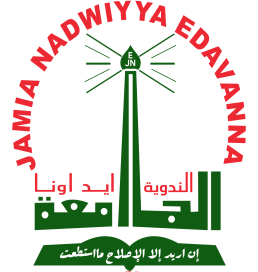
The emblem of Jamia Nadwiyya Education

The logo of Jamia Nadwiyya is a pictorial representation of its holistic vision. It corresponds with the Educational Mission of Kerala Nadvathul Mujahideen, to whose pioneering efforts and sustained support the Institution owes its genesis and progress. The lighthouse at the apex is a symbol of divine guidance and hence suggestive of the Institutions commitment to "empowerment through education" and of its optimism about the ultimate victory over all forces of darkness. The open book stands for the Sacred Scripture, the Holy Quran - the alpha and omega of wisdom, the gist of the meaning of ultimate life and the prime articulation of the message that the fear of God is the beginning of wisdom.

The Book also stands for knowledge, the dissemination of which is the short- term objective of the Institution. It serves as the foundation of all institutional activities of Jamia Nadwiyya. The Name is etched in English Alphabet on the periphery of a circle which represents the globe we live in. The same name is also carved in Arabic calligraphy signifying the enormous impact of Arabic in the cultural orientation of the Institution and its dissemination of Islamic values. This also manifests the close Indo-Saracenic ties that prevailed in this beautiful land from time immemorial. The Book portray the Quranic Verse "I desire naught save reform so far as I am able". It implies that the extension service to society is more important than any change brought out in the individual. Thus, Jamia Nadwiyya depicts a paradigm shift in the attitude towards society.

Profile

Jamia Nadwiyya is a Muslim Minority Institution established and maintained by the Kerala Nadvathul Mujahideen (KNM), a socio-cultural-educational renaissance movement of Kerala. The vision of the Institution is to progress as a deemed-to-be- university of international standards. The role of classical languages like Persian and Arabic in preserving the cultural heritage, in maintaining social harmony and in promoting national unity and integrity, needs to be given more significance. Arabic and Persian are irrefutable legacies of our culture and these twin languages have made tremendous contributions for the enrichment of the composite culture of our great nation. The development of science and technology has also definitely played an important role in the development of this cultural progression.

Image

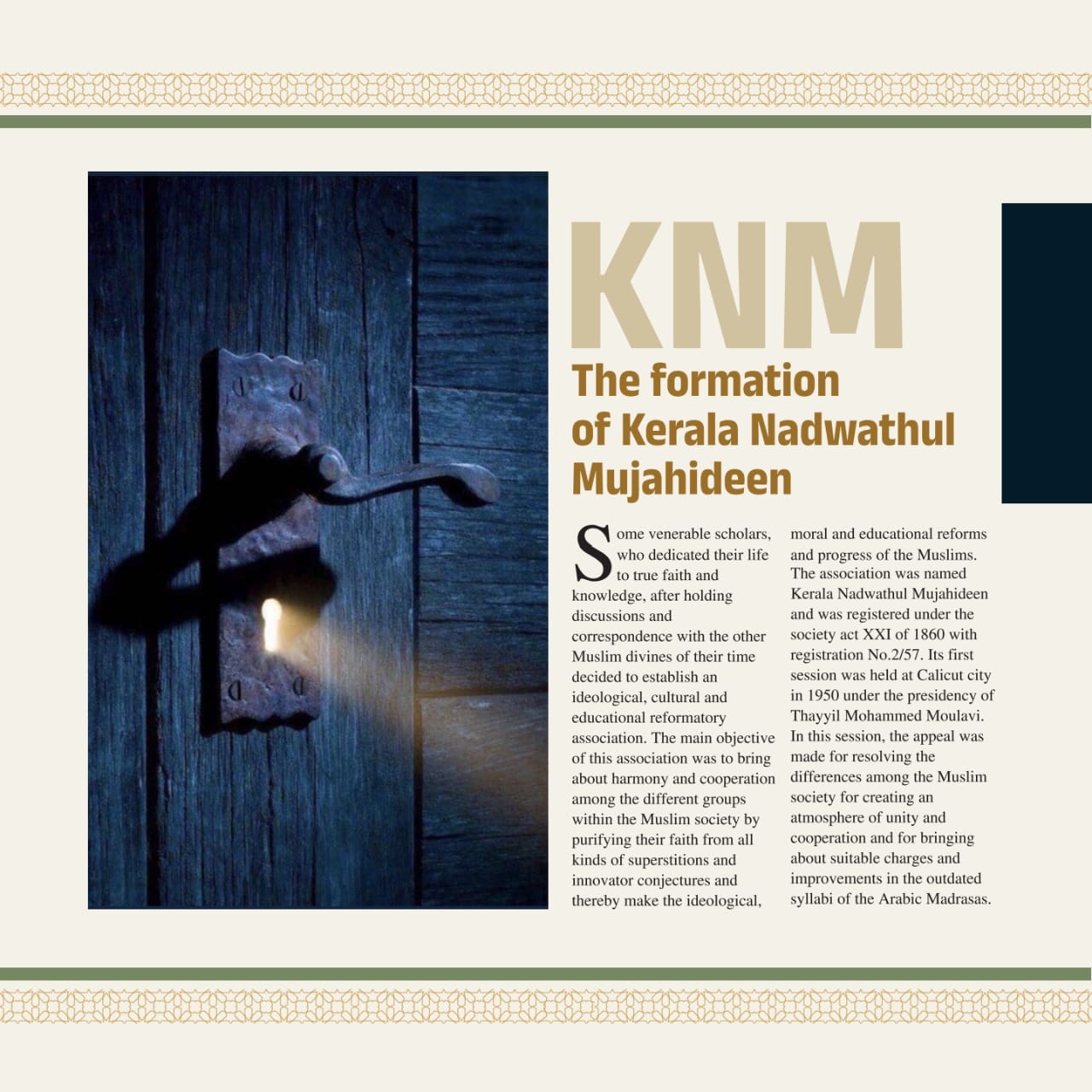
The formation of Kerala Nadwathul Mujahideen

The formation of Kerala Nadwathul Mujahideen S ome venerable scholars, who dedicated their life to true faith and knowledge, after holding discussions and correspondence with the other Muslim divines of their time decided to establish an ideological, cultural and educational reformatory association. The main objective of this association was to bring about harmony and cooperation among the different groups within the Muslim society by purifying their faith from all kinds of superstitions and innovator conjectures and thereby make the ideological, moral and educational reforms and progress of the Muslims. The association was named Kerala Nadwathul Mujahideen and was registered under the society act XXI of 1860 with registration No.2/57. Its first session was held at Calicut city in 1950 under the presidency of Thayyil Mohammed Moulavi. In this session, the appeal was made for resolving the differences among the Muslim society for creating an atmosphere of unity and cooperation and for bringing about suitable charges and improvements in the outdated syllabi of the Arabic madrasas

Image

FOUNDATION

At the beginning of the 20 Century, Kerala was passing through a dark age under the British colonial regime. The people of Kerala, who were mostly illiterate, practiced ludicrous superstitious and fostered many exotic customs and taboos. In Malabar, the Muslim Community along with other marginalized backward communities remained in an abyss of ignorance and gloominess. Educational system and facilities were virtually non-existent and the few surviving educational institutions where languishing in misery due to acute paucity of resources and attention. During pre-independence days, religion was exploited by people with vested interests. Fortunately, the ideals of stalwarts like Moulana Abul Kalam Azad gradually percolated into Kerala. The religious views and scholarly approach of Moulana Shibili Numani and Shahwaliyullah Dahlawi paved the way for a renaissance among the Muslims of Malabar. The educational vision of Dr Zakir Hussain had also great impact on the Muslims of Kerala. The Aligarh Movement of Sir Sayyid Ahmed Khan also made a tremendous impact on the mindset of Muslims. These developments were lapped up by a few pioneers, who were also convinced of the need to establish modern educational institutions to ameliorate the social and educational backwardness of the Muslims of Kerala. Deeply anguished by the educational, cultural and economic backwardness of the Muslim community after the Malabar Revolt of 1921, the founders of Kerala Nadwathul Mujahideen felt that unless some practical steps were taken to translate their ideas and objectives into action, it will not be possible to arrest the rapid decline of the Community. It was necessary to apply new strategies to combat the cultural, educational and economic deterioration. The founders of Kerala community and country. Nadwathul Mujahideen - having prolonged ties with the modern universities, colleges and schools inspired Malabar Muslims to start an institution with a new vision combining secular as well as religious education making use of the best elements in the oriental culture and the arts and sciences of the west along with the teachings of Islam. Many scholars and social reformers put forward the idea of establishing a higher educational institution under the direct control of KNM. On the basis of a resolution adopted by the State Council of KNM on 15" January 1964, a 24-member trust was registered under the Societies Registration Act, to carry out the mission. On 24h August 1964, Jamia Nadwiyya was inaugurated by Chief Engineer Janab TP Kuttiyammu Sahib at a function presided over by Janab COT Kunhipakki Sahib. Being a major educational complex of Arabic language and literature and modern sciences, Jamia Nadwiyya has played an indisputable role in developing the educational cultural and scientific spectrum of Kerala. The students of Jamia Nadwiyya are aware and proud of their rich tradition and they are ready for the creation of a better future for their community and country.
Image

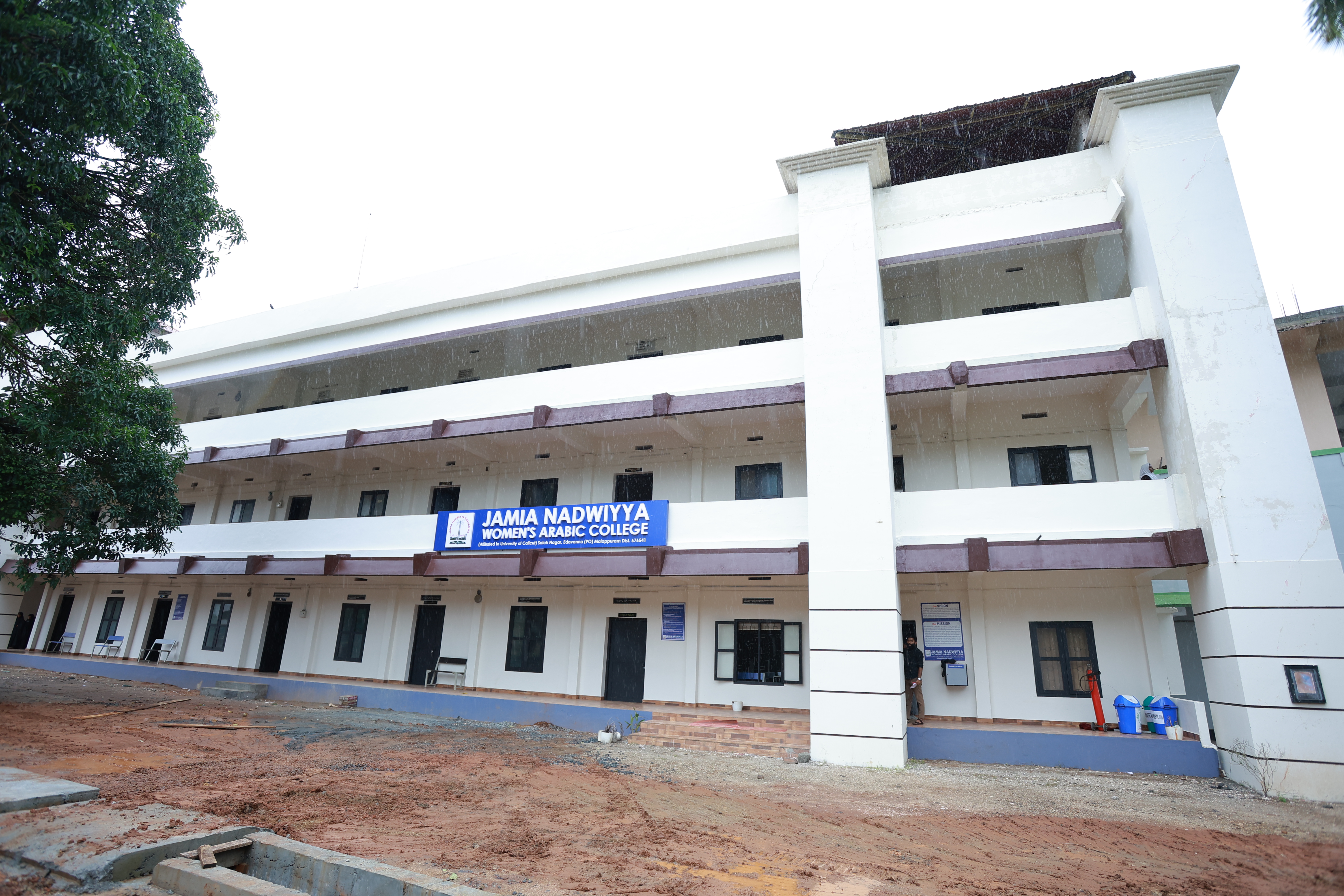
Jamia Nadwiyya Women's Arabic College

Jamia Nadwiyya has been promoting higher education for girls. Accordingly, an Arabic College - exclusively for women - was established in 2013 as a recognized college affiliated to the University of Calicut. This is a self-financing college offering BA Afzal-ul-ulama Preliminary and BA Afzal-ul-ulama Degree. A large number of girls enter the College for study and exit cheerfully to serve the community.

Image

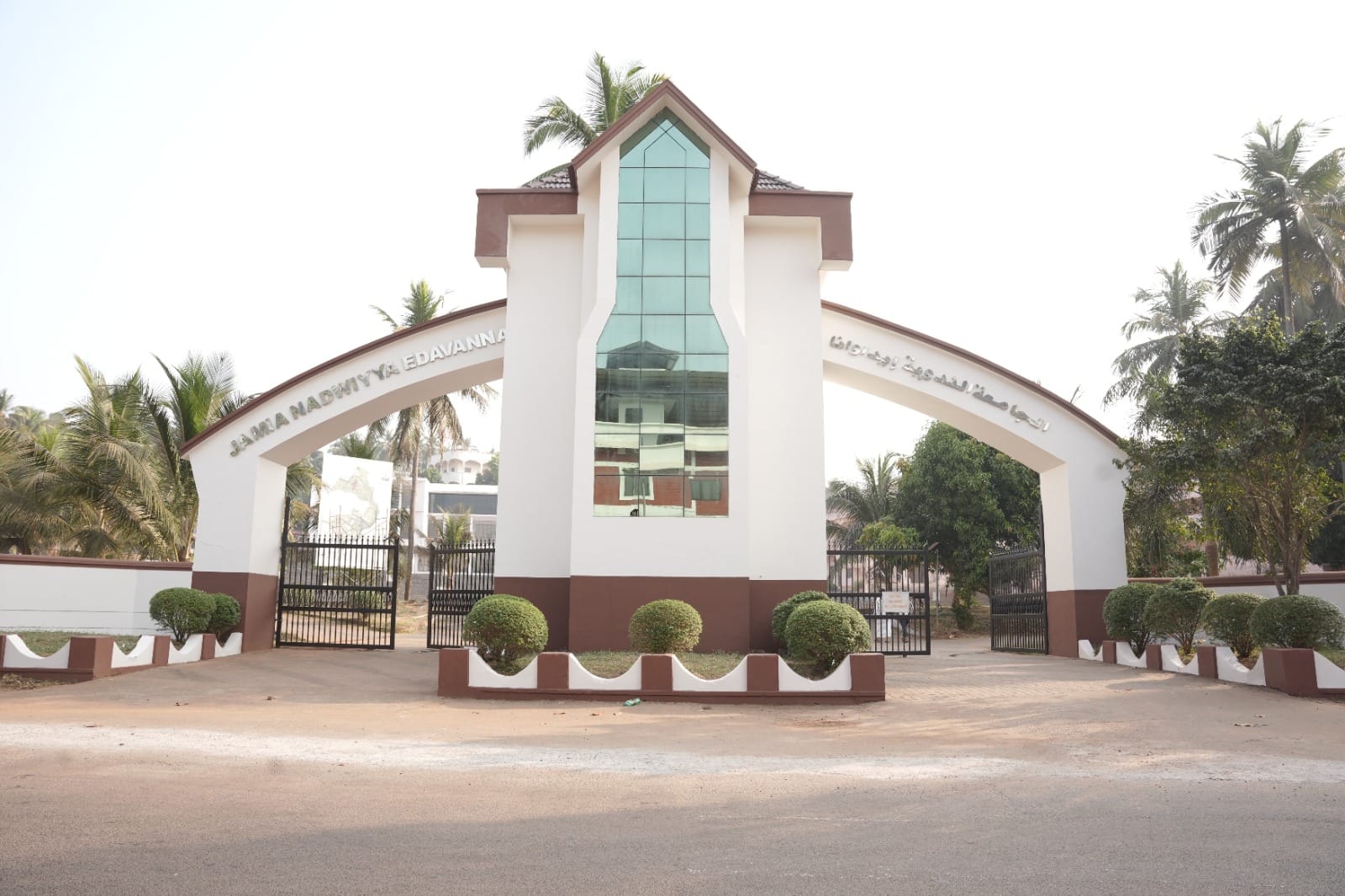
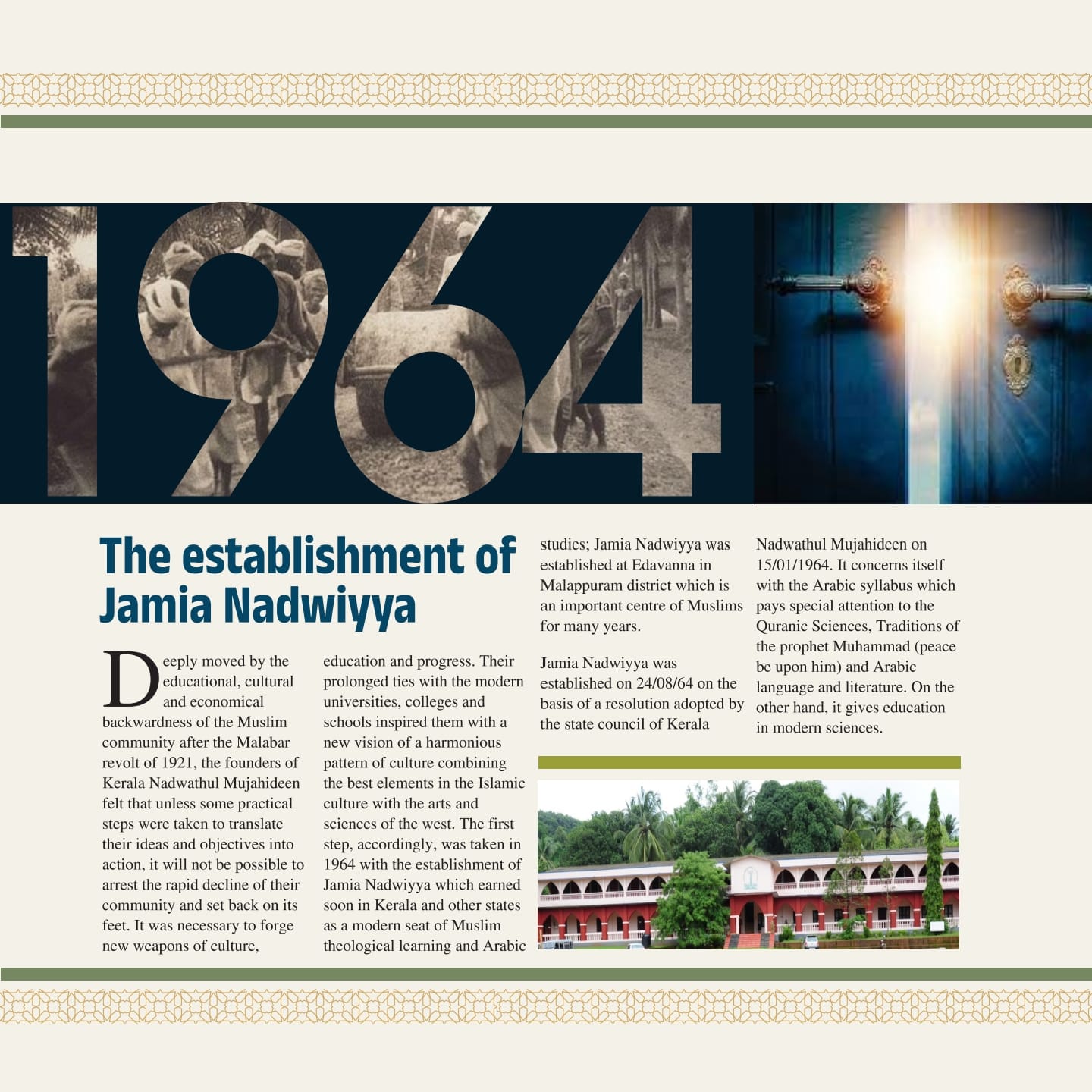
The establishment of Jamia Nadwiyya

Deeply moved by the educational, cultural and economical backwardness of the Muslim community after the Malabar revolt of 1921, the founders of Kerala Nadwathul Mujahideen felt that unless some practical steps were taken to translate their ideas and objectives into action, it will not be possible to arrest the rapid decline of their community and set back on its feet. It was necessary to forge new weapons of culture, education and progress. Their prolonged ties with the modern universities, colleges and schools inspired them with a new vision of a harmonious pattern of culture combining the best elements in the Islamic culture with the arts and sciences of the west. The first step, accordingly, was taken in 1964 with the establishment of Jamia Nadwiyya which earned soon in Kerala and other states as a modern seat of Muslim theological learning and Arabic ■ studies; Jamia Nadwiyya was established at Edavanna in Malappuram district which is an important centre of Muslims for many years. Jamia Nadwiyya was established on 24/08/64 on the basis of a resolution adopted by the state council of Kerala Nadwathul Mujahideen on 15/01/1964. It concerns itself with the Arabic syllabus which pays special attention to the Quranic Sciences, Traditions of the prophet Muhammad (peace be upon him) and Arabic language and literature. On the other hand, it gives education in modern sciences.

Image
Image
Icon

Salah Nagar, Edavanna MalappuramDt., Kerala, India-676 541

Contact Us